Not all work yields immediate, tangible results – but that doesn’t mean it’s any less important!
We started our day with Bournemouth’s best breakfast at Binnies in Winton. Aside from a great bonding time for the team, all I can say is mission accomplished:

Following our mammoth fried feast, we headed to the home of one of our team members and got to work. We started with a discussion of ‘what is a church website for’ – who are the key audiences, what are the main user intents (or reasons for users visiting the site). Throughout this process we made a note of any specific changes or improvements that could enhance the Lansdowne website, whilst trying to not let these details distract from the bigger picture discussion.

After this chat, and a short coffee break, we moved on to talk about a few key areas, such as navigation, lessons that could be learned from our site analytics and improving the usability of the site for those who need to create and moderate content. We then proceeded to add more ‘post it note ideas’ to the detailed changes we already had, before arranging them on whiteboard, both by complexity (time taken to complete) and by priority.

After lunch the team got to work implementing the highest priority changes, starting with the quickest fixes – the tasks with the smallest amount of work for the biggest payoff.
Now here’s where I make my point – if you were to log on to www.lansdownechurch.uk this morning, and then again this evening, you probably wouldn’t notice much difference. You might, in fact, struggle to find anything much at all that’s changed. This is for three (or more) reasons:
- A lot of work has been done under the hood e.g. making changes to the version control the site uses, optimising images and finalising hosting settings
- Some of the innovations are still in the design phase, so aren’t yet live, but critically,
- Much of the work that happened today will never be *seen*
That is to say, much of today’s work will never be seen directly. For example, a shared breakfast was a great way to start the day, but also enabled the lads to catch up with each other and have a laugh. The socialising wasn’t forcing an awkward team dynamic, there’s nothing ‘forced’ about this. Ensuring that people relate well to each other is not only good for the probable increase in productivity that it brings, but it’s fundamental to what the church should be – people of God helping other people and wanting to see and bring about growth in the people of God. That is, the kind of growth that is seen in numbers, as well as in spiritual maturity.
Not only is this a primary calling, but it encourages an openness and sensitivity in the way the church’s volunteers relate to each other – cultivating an environment where feedback is given and received in love, as often as possible – something I blogged about last week. This atmosphere lends itself to productivity, with an increased output in terms of tasks completed, and to a higher standard in terms of the quality of the work; so if you’re a ‘results-oriented’ person, don’t worry – it’s cool! Just remember not all results are immediately tangible, some require a deeper look.

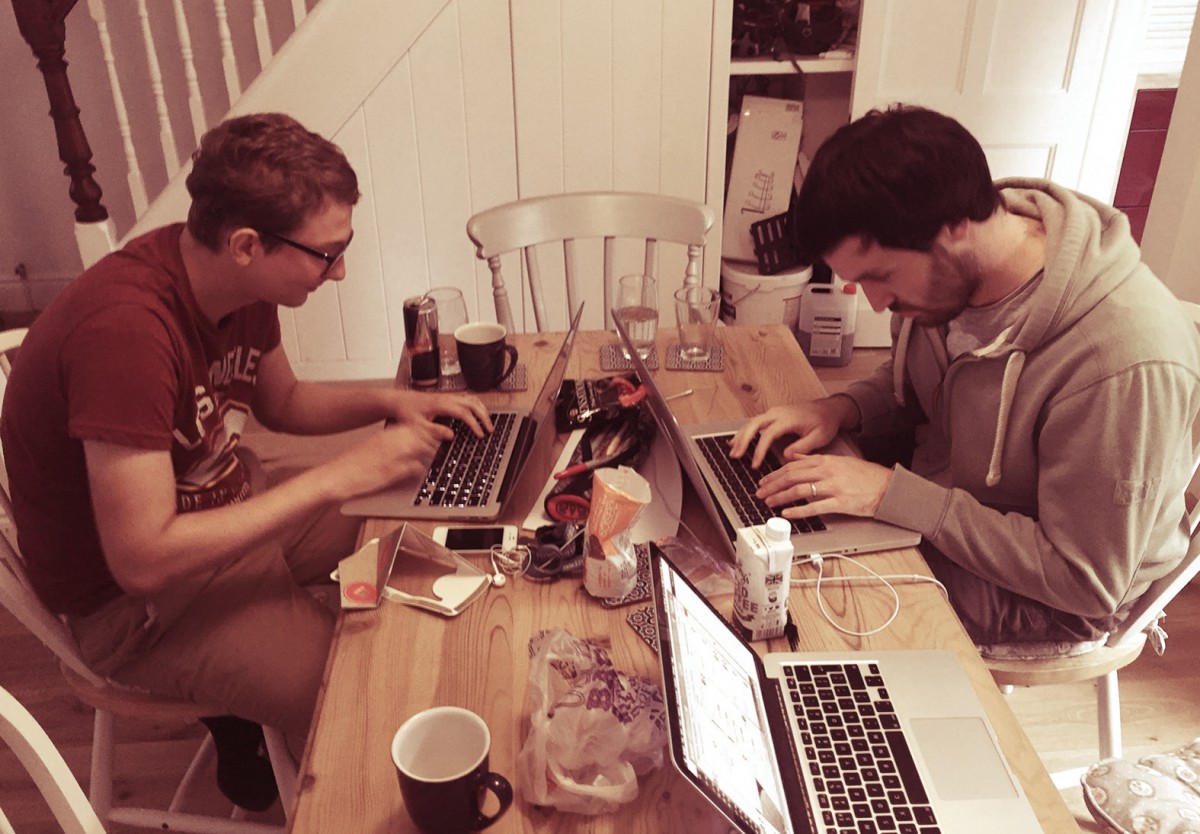
Two of our developers, coding. Hard. #icedcoffee
Aside from teamwork, however, an activity that took up most of today’s time was preparation. This is another one of those things which won’t necessarily sound amazing when someone asks, ‘So what did you get done on your hackday?’.
I think I can safely assume we’ve all heard too many anecdotes about the team not being able to win the match at the weekend without putting in the legwork during midweek training. Or perhaps the sermon on Sunday not being possible without lots of preparation in the office in the week.
Get the picture? It’s an obvious one:
Fail to plan and you plan to fail
Some guy who gets quoted wayyyy too much…
Church Creative and Communications work are not the only ministries that require time to be invested in planning and preparation. There will always be a conflict when these ‘results’ aren’t visible straight away. Time is a valuable resource! However: bigger, more complex results wouldn’t happen without the heat bubbling away under the surface.